Continuous Monitoring from a SmartCannula
Our patented nanotechnology sensor makes every oxygen delivery device "smart". SmartCannulas monitor breathing continuously in real time while delivering oxygen. The data is streamed to hospital systems to improve patient safety and for clinical teams to catch deterioration hours earlier.

 ·UCL / UCLH spin-out · CE-mark pathway underway
Continuous Monitoring from a SmartCannula
Our patented nanotechnology sensor makes every oxygen delivery device "smart". SmartCannulas monitor breathing continuously in real time while delivering oxygen. The data is streamed to hospital systems to improve patient safety and for clinical teams to catch deterioration hours earlier.
·UCL / UCLH spin-out · CE-mark pathway underwayof respiratory rate measurements on observation charts are inaccurate, incorrect or missed.
elevated respiratory rate raises the odds of cardiac arrest more than fivefold
global patient-monitoring market, growing as continuous monitoring moves to the general ward.
Source: Grand View Research, Patient Monitoring Devices Market Report, 2025–2033
The gap on the ward
Respiratory rate changes hours before other vital signs but is the least reliably measured.
Counted by hand, once every few hours
Manual respiratory-rate checks are done intermittently (every 4-12 hours) and under time pressure, leaving long windows where no one is watching.
Error-prone and often 'guess-timated'
Rates are frequently rounded or guessed, so subtle but meaningful changes in a patient's breathing quietly slip through.
Deteriorations lead to huge cost and patient implications.
A patient deteriorating on the ward triples their length of stay, can cost the hospital up to 10x more, and leads to worse outcomes.
And the alternatives are not well adopted or tolerated
Every other way to sense breathing straps more hardware onto the patient.
Thermal, acoustic, ECG-derived, motion and oximetry-derived approaches all add devices patients don't tolerate, so they're removed and the signal is lost. RespiraFibre lives inside the oxygen cannula the patient already wears.
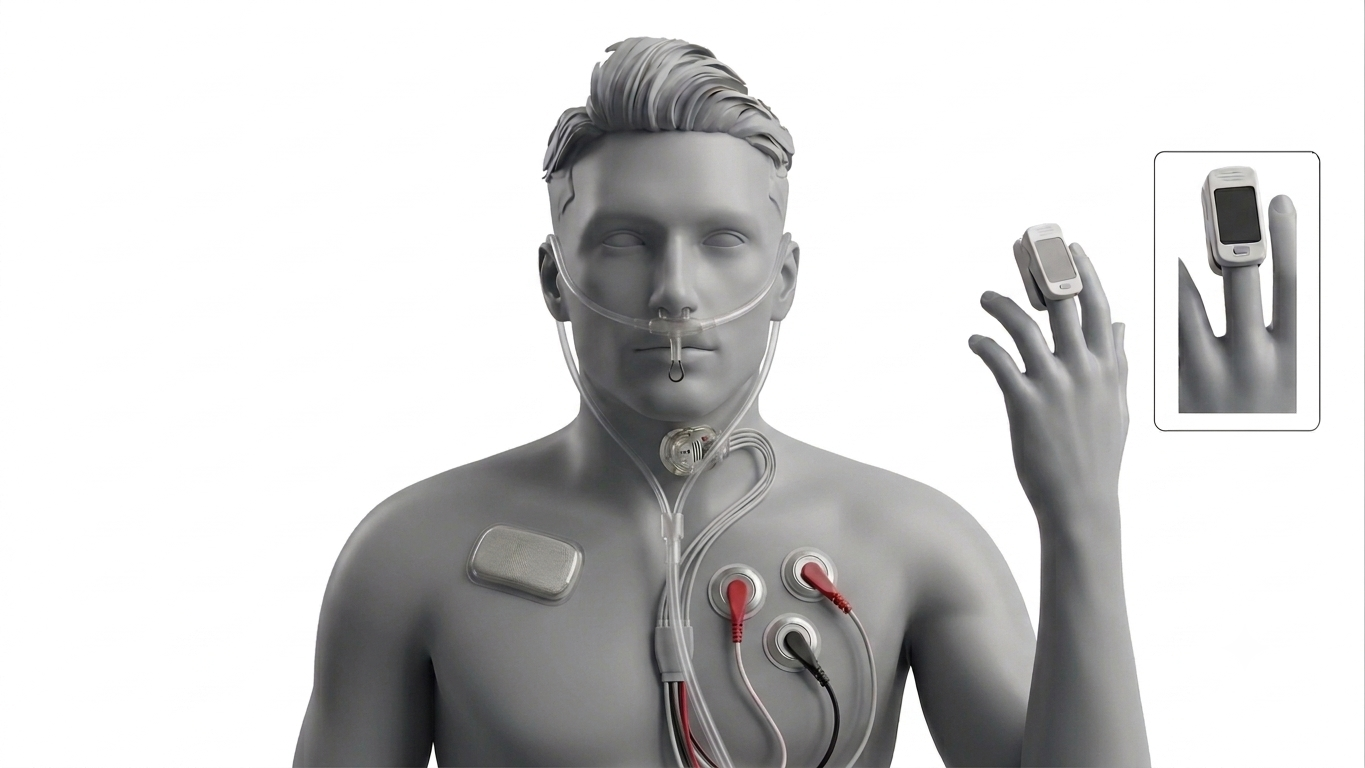
The RespiraFibre system
Continuous, direct-source breathing data from inside the cannula patients already wear.
Direct-source sensing
An ultra-sensitive nanotech fibre sits in the standard oxygen cannula, capturing a true breathing waveform at the airway, not an inferred estimate.
Real-time to hospital systems
A reusable wireless node streams the waveform securely to the monitoring and EPR systems your teams already use in real time.
AI-powered insight
On-stream analytics surface trends, apnoea and irregularity, flagging meaningful change and reducing alarm noise before it reaches the clinician.
Sustainable by design
A low-cost disposable sensor pairs with a reusable node, giving clinical hygiene without the waste and cost of fully disposable monitors.
The product suite
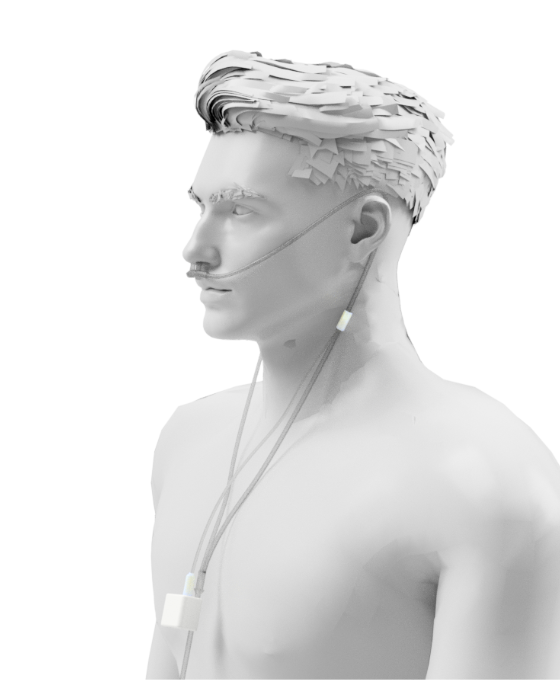
SmartCannula
The original platform. Our nanotech fibre sits inside the standard nasal cannula, capturing the breathing waveform while oxygen is being delivered.
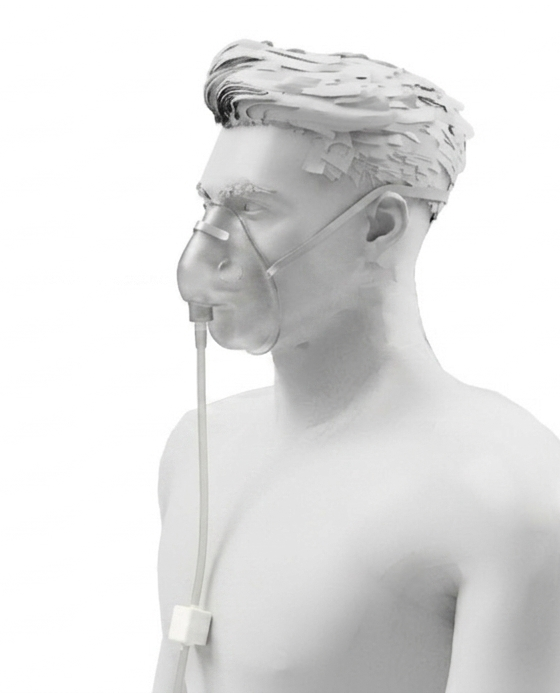
SmartMask
The same sensing built into a Hudson oxygen mask, so masked patients stay continuously monitored.
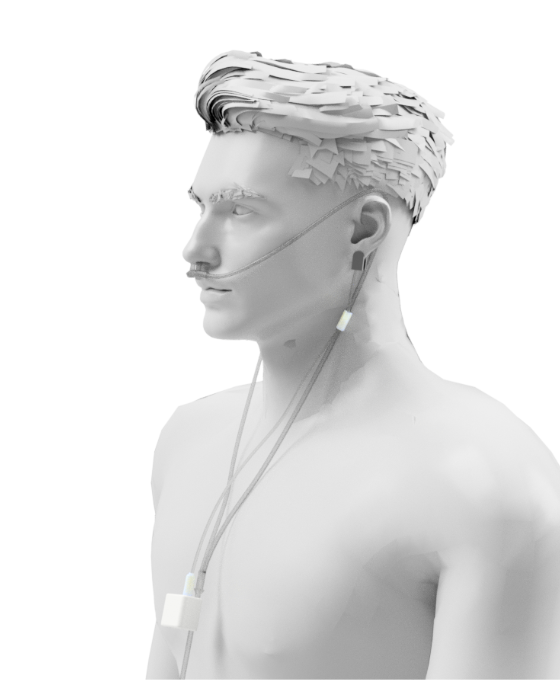
SmartCannulaOxyPlus
The cannula sensor paired with a pulse oximeter, adding oxygen saturation and heart rate alongside the breathing waveform in one wearable.
How it works
From the breath to the clinician, one continuous path.
Cannula sensor
Nanotech fibre captures each breath at the airway.
Wireless node
Reusable node digitises and streams the waveform securely.
Hospital systems
Data lands in monitoring & EPR via secure AWS cloud.
Clinician alert
Meaningful change is flagged to the team, earlier.
Traction & backing
Award-winning, and embedded in the UK's leading clinical-innovation network.
Medipex NHS Innovation Awards & Showcase
Recognised among the most promising healthcare innovations in the NHS. This validates both the clinical need and RespiraFibre's approach to meeting it.
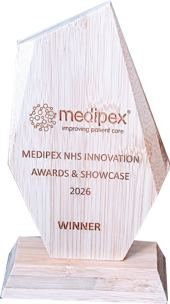
Non-dilutive grants & innovation funding secured to date.
NIHR research collaborations, including UCLH Biomedical Research Centre.
First-site clinical evaluation underway at a leading NHS trust.
Developed and supported with





"Being on the ward and only seen intermittently was harrowing. I felt abandoned."
Representative Patient
UCL & UCLH provenance
Developed at UCL in collaboration with UCLH clinicians.
CE-mark regulatory pathway
Designed to medical-device standards with a defined CE-mark pathway underway for clinical deployment.
Secure by design, powered by AWS
Patient data streams over secure, scalable AWS infrastructure built for healthcare.
Let's bring continuous respiratory monitoring to your wards.
We are looking to work with NHS clinical teams, procurement, and deep-tech partners to deploy and evaluate RespiraFibre.